If you want to see where the Catholic Church is actually alive, don't look at the empty pews in Paris or the quiet cathedrals of Rome. Look at Kinshasa. Look at Juba. While the West treats religion like a dusty heirloom, Africa is treating it like oxygen.
Pope Francis didn't head to the Democratic Republic of Congo (DRC) and South Sudan just for a photo op. He went because that's where the numbers are. By 2050, it's estimated that one in every three Catholics in the world will be African. This isn't just a "growth region" in some corporate sense; it's the new lungs of the entire institution.
The Numbers Europe Can Only Dream Of
The shift is startling. In 1910, about 1% of the population in Sub-Saharan Africa was Catholic. Today? It's over 20% and climbing. While Europe is hemorrhaging priests—losing thousands every year—Africa is a vocational powerhouse. In 2022, Africa led the world with nearly 35,000 major seminarians.
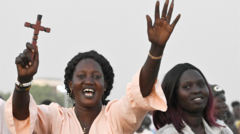
It's not just about more people; it's about a different kind of energy. When the Pope landed in Kinshasa, over a million people showed up for Mass. People didn't just stand there; they danced, they sang, and they waited for hours in the heat. Try getting a million people to show up for anything in London or Berlin without a music festival attached.
The Vatican knows its survival depends on this demographic. Africa isn't just receiving missionaries anymore; it’s starting to send them back to the "de-Christianized" West. We’re seeing a total reversal of the colonial-era religious flow.
Hands Off Africa
During his visit to the DRC, Francis dropped the polite diplomat act. He stood in a country literally being stripped of its minerals—cobalt, diamonds, copper—and told the world to "Stop choking Africa."
It was a gut punch to the multinational corporations and foreign powers that treat the continent like a pantry to be looted. The DRC is one of the richest countries on Earth in terms of resources, yet its people are among the poorest. Francis wasn't just talking about souls; he was talking about economics. He called it "economic colonialism," and honestly, he's right.
The Pope's message to the youth at Martyrs' Stadium was even more direct. He told 65,000 young people to look at their hands. "God has placed the gift of life... in those hands of yours," he said. He led them in a chant: "No to corruption!" It wasn't some abstract theological lecture. It was a call to arms against the "son of the soil" syndrome—the tribalism and ethnic rivalry that politicians use to keep people divided while they pocket the wealth.
The Peace Pilgrimage that Made History
The South Sudan leg of the trip was something the world had never seen. It wasn't just a Catholic event. Francis was joined by the Archbishop of Canterbury and the Moderator of the Church of Scotland. This "Ecumenical Pilgrimage of Peace" was a massive flex of Christian unity.
South Sudan is the world's youngest nation, and it’s been through hell. A civil war that kicked off in 2013 killed 400,000 people and displaced millions. The leaders there—President Salva Kiir and Vice President Riek Machar—both claim to be Christians.
Remember in 2019 when Francis literally knelt and kissed their feet at the Vatican, begging them to stop the war? That wasn't a stunt. It was a desperate act of humility that clearly hasn't been fully honored yet. By showing up in Juba with Anglican and Presbyterian leaders, the Pope was saying: "You can't use our faith to justify your war."
Real Growth Comes with Real Friction
It’s not all sunshine and rising stats. The African Church is facing massive pressure from two sides:
- Pentecostalism: In places like Nigeria and Malawi, people are leaving the Catholic Church for "Prosperity Gospel" churches. These groups offer miracles and wealth, which can be a lot more tempting than the traditional Catholic focus on suffering and patience.
- Cultural Clashes: The Vatican is currently wrestling with issues like polygamy. Last year, they even set up a study group for it. In many nomadic or rural cultures, having multiple wives is a survival mechanism or a status symbol. The Church’s hard line on "one man, one woman" creates a huge friction point that isn't going away.
Then there's the "son of the soil" problem. This is basically religious tribalism where a community refuses to accept a Bishop because he isn't from their specific ethnic group. It's a mess, and it shows that even in a growing church, old divisions run deep.
What This Means for You
If you’ve been ignoring Africa because you think it’s just a "missionary project," you’re living in the past. The center of gravity has moved. The decisions made by African Bishops in the next decade will likely dictate the direction of the global Church on everything from liturgy to social teaching.
The West is becoming a religious museum. Africa is the workshop. If you want to understand the future of global Christianity, stop looking at the Vatican's archives and start looking at the youth movements in Lagos and Kinshasa.
Watch how these local churches handle the tension between tradition and their own cultural identity. Keep an eye on how they push back against corrupt governments. That’s where the real story is. The "major Africa tour" wasn't just a trip; it was a surrender to the reality that the future of the faith is Black, young, and extremely vocal.