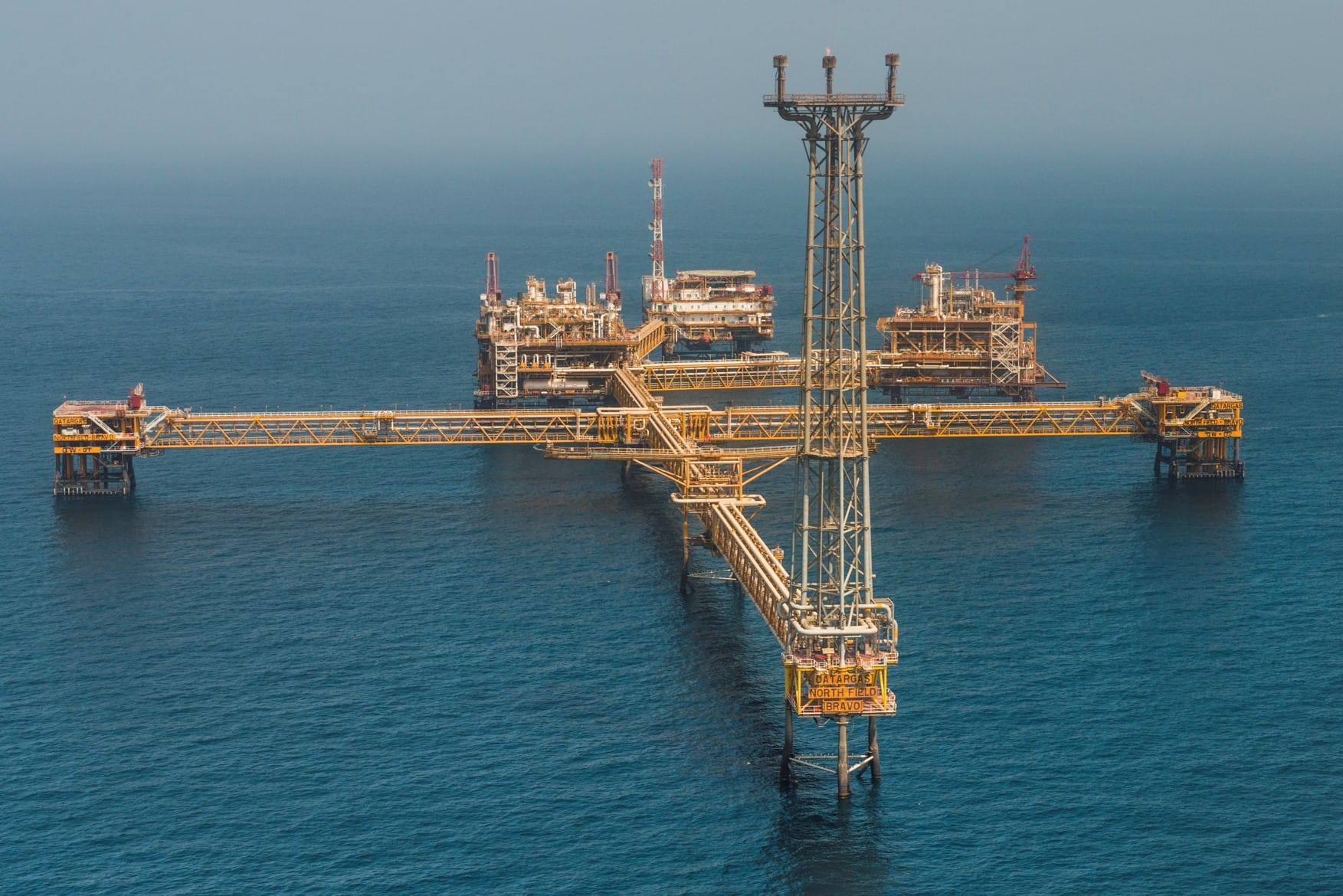
The global liquefied natural gas (LNG) market operates on a razor-thin margin of spare capacity, where the loss of a single major export terminal triggers a structural deficit that cannot be resolved through short-term fuel switching. A kinetic strike on Qatari gas infrastructure—specifically the North Field expansion or the Ras Laffan processing hub—does not merely pause supply; it resets the global energy cost curve for a minimum of 36 to 60 months. This duration is dictated by the hard physics of cryogenic engineering and the inelasticity of specialized global supply chains for Long-Lead Items (LLIs).
The Infrastructure Fragility Matrix
To understand why a disruption lasts three to five years, one must analyze the specific components of an LNG export terminal. Qatar’s dominance relies on massive "trains"—liquefaction units that cool natural gas to -162°C. These are not modular or easily replaceable.
The recovery timeline is governed by three critical bottlenecks:
- The Methane Compressor Stator Constraint: The heart of an LNG train is the refrigerant compressor. These units are custom-engineered for the specific gas composition of the North Field. Replacing a destroyed compressor string involves a lead time of 18 to 24 months for fabrication, followed by six months of on-site integration and testing. There is no global "inventory" of these machines.
- Cryogenic Heat Exchanger (MCHE) Replacement: Qatar utilizes large-scale heat exchangers that are manufactured by only a handful of firms globally (primarily Air Products or Linde). A catastrophic failure caused by a kinetic strike requires a slot in a manufacturing queue that is already backlogged by global energy transition projects.
- Specialized Metallurgy and Post-Weld Heat Treatment: Repairing high-pressure piping and storage tanks involves specialized nickel-steel alloys. The welding process for these materials requires precise thermal cycling. In a post-strike environment, the shortage of certified cryogenic welders becomes a secondary limiting factor, extending the "return to service" date regardless of capital availability.
The Three Pillars of Market Asymmetry
A strike on Qatari soil creates a disproportionate impact on global prices compared to disruptions in the United States or Australia. This asymmetry is rooted in the "Destination Flexibility" and "Contractual Rigidity" of Qatari volumes.
The Logic of Contractual Vacuum
Unlike US LNG, which is largely sold on a Free on Board (FOB) basis with flexible destinations, Qatari gas is predominantly tied to long-term Sales and Purchase Agreements (SPAs) with Asian utilities. When a strike occurs, these utilities—specifically in Japan, South Korea, and China—lose their "baseload" energy. This forces them into the spot market simultaneously.
The resulting "Price Spiral" is a function of:
$$P_{spot} = f(D_{inelastic} / S_{residual})$$
As $S_{residual}$ (available spot cargo) drops toward zero, the price $P_{spot}$ ceases to reflect the cost of production and begins to reflect the "Value of Lost Load" (VOLL), which is the economic cost of a blackout.
Geographic Concentration Risk
Qatar’s production is concentrated in Ras Laffan. This creates a single point of failure. While the United States has facilities spread across the Gulf Coast and the Eastern Seaboard, the North Field’s extraction and processing are geographically tethered. A localized strike effectively shutters the state’s entire export apparatus.
The Marginal Cost of Substitution
When 77 million tonnes per annum (mtpa) of supply—and the planned expansion to 126 mtpa—is threatened, the global economy looks for substitutes. However, the cost function of substitution is non-linear.
- Coal-to-Gas Switching Limits: Most European and Asian economies have already maximized their ability to switch from gas to coal. The remaining gas demand is "hard" demand (industrial feedstock, residential heating, and grid stability).
- The FSRU Bottleneck: Floating Storage and Regasification Units (FSRUs) can be deployed to import gas from elsewhere, but they do not solve the problem of a missing supplier. There are not enough uncommitted LNG cargoes in the Atlantic or Pacific basins to offset a total Qatari outage.
- Upstream Inertia: Increasing production in the US Permian Basin or the Australian offshore fields requires years of drilling and pipeline construction. Short-term "surge" capacity in the global gas market is effectively less than 2% of total demand.
Analyzing the 3 to 5 Year Recovery Horizon
The "3 to 5 year" estimate provided by analysts is often cited without a breakdown of the actual phases of restoration. A rigorous project management view reveals a more complex reality:
Phase I: Damage Assessment and De-risking (Months 1–6)
Before any physical repair begins, the site must be cleared of unexploded ordnance and hazardous chemical leaks. This is followed by a forensic engineering audit to determine if the structural foundations of the liquefaction trains were compromised. If the concrete pilings have shifted due to blast pressure, the entire train must be leveled and rebuilt, pushing the timeline toward the 5-year mark.
Phase II: Procurement and Global Queue Jumping (Months 7–30)
The Qatari government would likely use its sovereign wealth to attempt to "buy" manufacturing slots from other global projects. However, this creates a secondary diplomatic crisis. If Qatar pays to jump the queue for a compressor, a planned project in the US or Mozambique is delayed. This spreads the "supply deficit" to other regions, ensuring that even if Qatar recovers, the global market remains tight for the duration of the decade.
Phase III: Commissioning and Ramp-Up (Months 31–48)
LNG facilities cannot be turned on with a switch. They require a staggered "cool-down" period where systems are gradually introduced to cryogenic temperatures. Any flaw in the repair phase will manifest here as a "thermal stress fracture," potentially resetting parts of the repair process.
Strategic Realignment of Global Trade Flows
The immediate consequence of a strike is a "Reverse Flow" of gas. Historically, gas flows from East to West or Middle East to Asia. In a post-strike scenario:
- The European Pivot: Europe, which has spent years weaning itself off Russian pipe gas, finds itself in a direct bidding war with Tokyo and Seoul. This breaks the "Transatlantic Price Spread."
- The Industrial Exodus: High-energy-intensity industries (ammonia, aluminum, glass) in non-producing regions will face permanent shutdowns. The "Energy Risk Premium" becomes a permanent feature of their balance sheets, leading to a structural shift of industrial capacity to the United States or regions with domestic gas hedges.
- The Acceleration of the "Dark Fleet" for Gas: Just as oil has moved toward shadow shipping to circumvent sanctions, gas will move toward high-risk, high-premium "security-heavy" transport routes. Insurance premiums (War Risk Clauses) will add a $2.00 to $5.00 per MMBtu overhead to all Middle Eastern volumes.
The Security-Energy Nexus
The North Field is shared with Iran (where it is known as South Pars). The technical complexity of the field means that pressure drops on one side can affect the other. A kinetic strike that damages Qatari wells could potentially lead to "reservoir damage," where the geological integrity of the gas field is compromised. This is the most catastrophic "tail risk." If the reservoir pressure is lost due to uncontrolled blowouts or improper capping after a strike, the 5-year recovery timeline becomes an optimistic fantasy, and the loss of supply becomes permanent.
The failure of the competitor's analysis lies in treating "supply" as a fungible commodity that can be redirected like an internet data packet. In reality, LNG supply is a rigid, physical chain of specialized steel and extreme thermodynamics.
Energy buyers must immediately move to diversify into "Duration-Hedged" contracts. This involves prioritizing suppliers with multi-terminal footprints and avoiding "Single-Point-of-Failure" origins. For industrial consumers, the strategic move is the aggressive adoption of "On-Site Synthetic Backups" (such as LPG air-mix systems) to survive a 60-month period of extreme volatility. The window for cheap, reliable Middle Eastern transition gas has effectively closed the moment the first kinetic threat was neutralized; the actual strike merely formalizes the new high-cost equilibrium.
Would you like me to develop a comparative risk model for Australian versus North American LNG facilities to further refine your diversification strategy?


