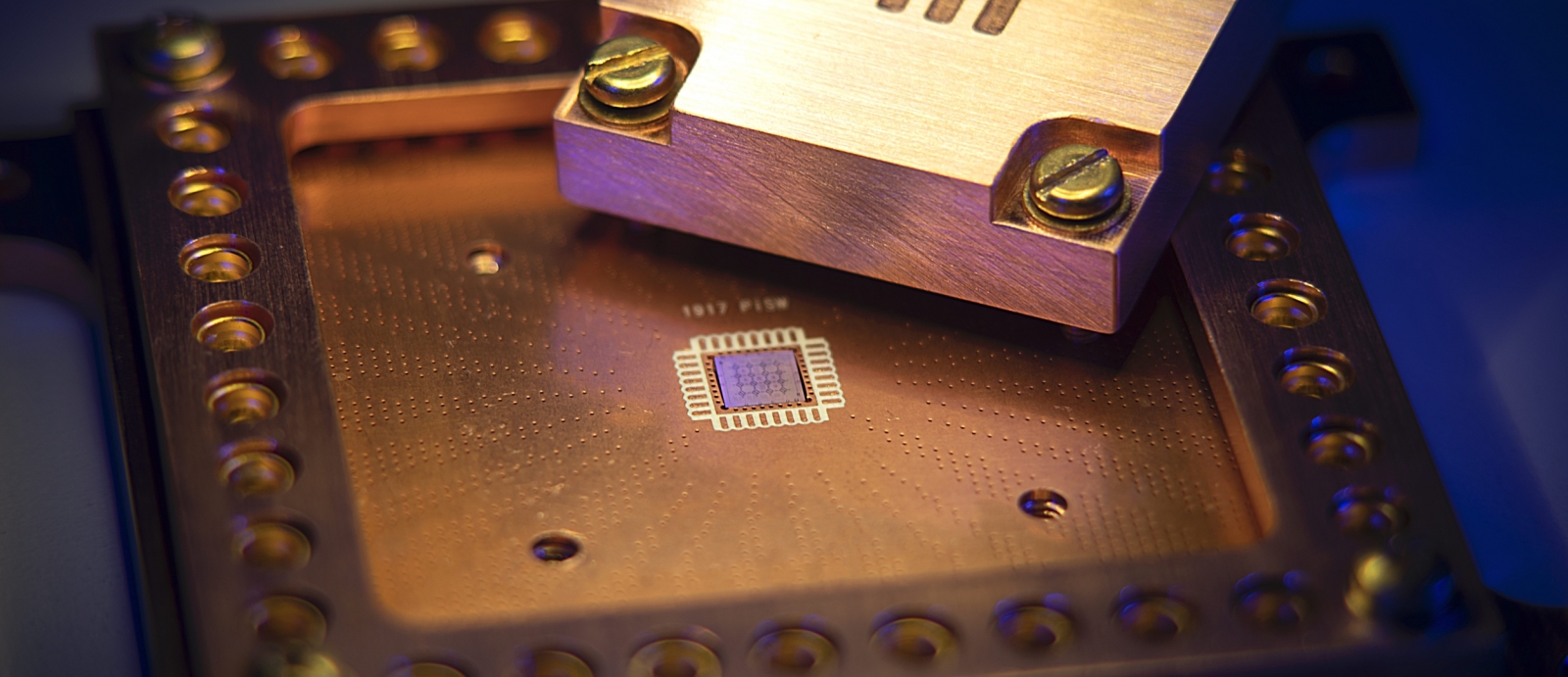
The transition of quantum computing from laboratory curiosity to industrial asset is currently governed by three distinct convergence points: hardware error mitigation thresholds, the cooling power bottleneck, and the shift from venture-led exploration to procurement-led integration. While popular discourse focuses on "quantum supremacy"—a largely academic benchmark—the private sector has pivoted toward "quantum utility." This distinction represents the moment when a quantum processor, despite being noisy and imperfect, executes a specific heuristic or algorithm faster or more accurately than a classical supercomputer of equivalent power consumption.
The Three Pillars of Quantum Scalability
The viability of a quantum firm is no longer measured by qubit count alone. Raw qubit numbers are a vanity metric if not paired with high gate fidelity and sophisticated error correction protocols. To evaluate the current "inflection point," one must analyze the interplay between these three structural pillars:
- Logical Qubit Synthesis: High-performance computing requires error rates below $10^{-12}$. Current physical qubits operate at error rates between $10^{-3}$ and $10^{-5}$. The race is not to build more physical qubits, but to "bundle" them into logical qubits through surface codes or color codes. A firm’s value is a function of its "overhead ratio"—how many physical qubits it requires to produce one reliable logical qubit.
- Cryogenic and Interconnect Throughput: Superconducting and silicon-spin qubits require millikelvin temperatures. The thermal load of control electronics creates a hard ceiling on how many qubits can fit in a single dilution refrigerator. Companies moving toward modularity—linking multiple fridges via microwave or optical interconnects—are bypassing the "monolithic fridge" limitation that will stall competitors by 2027.
- Algorithmic Portability: The hardware-software stack is currently fragmented. Firms that can create "middleware" layers, capable of mapping high-level quantum circuits to multiple backends (e.g., trapped ions, neutral atoms, or photonics), are capturing the horizontal market before a dominant hardware architecture emerges.
The Cost Function of Quantum R&D
Developing a quantum-ready enterprise involves an escalating cost function. For a Fortune 500 company, the investment curve is defined by three phases:
- Algorithm Exploration: $1M–$5M annually. This involves hiring a small quantum-classical hybrid team to identify NP-hard or BQP-type problems within the firm’s supply chain, material science, or financial modeling portfolios. This is the "safe entry" phase.
- Proof-of-Value (PoV) Integration: $10M–$50M annually. This requires purchasing dedicated cloud time on systems from providers like IBM, Quantinuum, or IonQ. The goal is to run a "toy model" of a real-world problem—such as optimizing a single shipping route or simulating a small catalyst molecule—to find the "utility threshold" where quantum outperforms classical solvers.
- Infrastructure Commitment: $100M+ annually. This is the high-risk, high-reward phase of installing an on-premises quantum computer or a dedicated private cloud instance. Very few firms have crossed this threshold, as it requires a multi-year amortization schedule and a belief in the "Moore's Law of Qubits."
The Neutral Atom and Ion Trapped Pivot
While superconducting qubits—popularized by IBM and Google—held an early lead, a technical pivot is occurring. This shift is driven by the coherence time bottleneck. Superconducting qubits are fast but fragile, losing their quantum state in microseconds ($10^{-6}$ seconds). Trapped ion and neutral atom qubits, by contrast, utilize naturally occurring atoms suspended in vacuum by lasers or electromagnetic fields. These atoms can maintain coherence for seconds or even minutes.
The mechanism at play here is "connectivity." In a superconducting chip, a qubit can usually only interact with its nearest neighbors. In a trapped ion system, any qubit can be made to interact with any other qubit in the trap. This "all-to-all connectivity" reduces the number of gates required to run an algorithm, effectively making a 20-qubit trapped ion machine more powerful for specific tasks than a 100-qubit superconducting machine.
Market Distortions and the 'Quantum Winter' Hedge
The "inflection point" narrative is often used to mask a shifting capital environment. Venture capital for quantum firms is becoming more selective, moving away from "general-purpose quantum" and toward "quantum-inspired" or "quantum-specific" applications.
A primary distortion is the "SaaS-ification" of quantum. Many startups are rebranding themselves as software firms to avoid the brutal capital expenditures of building hardware. This creates a bottleneck: if only a few companies successfully build the hardware, they will exert monopsony power over the hundreds of software firms that need their machines to survive. This systemic risk is often ignored by analysts who view the quantum ecosystem as a standard tech stack.
Operational Constraints and Limitations
The path to a $10B quantum market is hindered by the "Talent and Helium-3 Bottleneck."
- Human Capital: There are fewer than 10,000 people worldwide with the doctoral-level physics and computer science training necessary to build these systems. Competitive poaching is driving up R&D costs faster than the technology is maturing.
- The Helium-3 Problem: Dilution refrigerators—essential for superconducting qubits—require Helium-3, a rare isotope primarily produced as a byproduct of nuclear weapons maintenance. A global shortage of this gas could physically cap the number of quantum computers that can exist simultaneously.
- Input-Output (I/O) Latency: Getting data into a quantum computer (loading the state) and out (measurement) is currently much slower than the quantum calculation itself. For big data applications, the "loading time" often negates any quantum speedup. Quantum is currently a "Compute-Heavy, Data-Light" tool.
Strategic Allocation of Capital
For a firm evaluating quantum readiness, the strategic play is to build "Quantum-Classical Hybrid" workflows. This means using classical CPUs/GPUs for 95% of a task and "offloading" the hardest 5% of the math—such as finding a global minimum in a complex landscape or simulating an electron orbital—to a quantum processing unit (QPU).
This approach minimizes exposure to current hardware errors while preparing the organization’s codebase for the eventual arrival of fault-tolerant quantum computers. The immediate focus should be on "Error Mitigation" (mathematical tricks to clean up noisy results) rather than "Error Correction" (using massive hardware redundancy), which is still several years away from commercial viability at scale.
Organizations must now audit their cryptography. The arrival of a powerful quantum computer will break current RSA and ECC encryption. This "Harvest Now, Decrypt Later" threat means that any data with a shelf life of more than five years is already at risk. The first industrial-scale deployment of quantum technology will not be a new drug or a faster trade—it will be the migration of the global financial and military infrastructure to Quantum-Resistant Cryptography (QRC).
Move from exploring "what a quantum computer can do" to "what your specific business logic costs when modeled as a quantum circuit." The firms that map their internal bottlenecks to specific quantum gates today will be the ones that capture the surplus value when hardware reaches the logical qubit threshold.